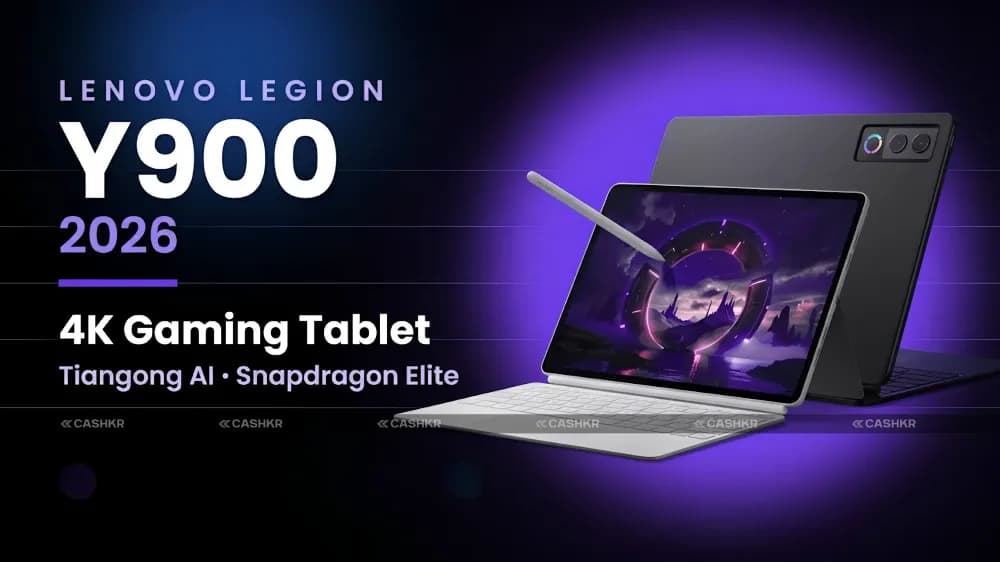
Lenovo Legion Y900 2026 Launched: 4K Display, Dual Sizes and Full Specs
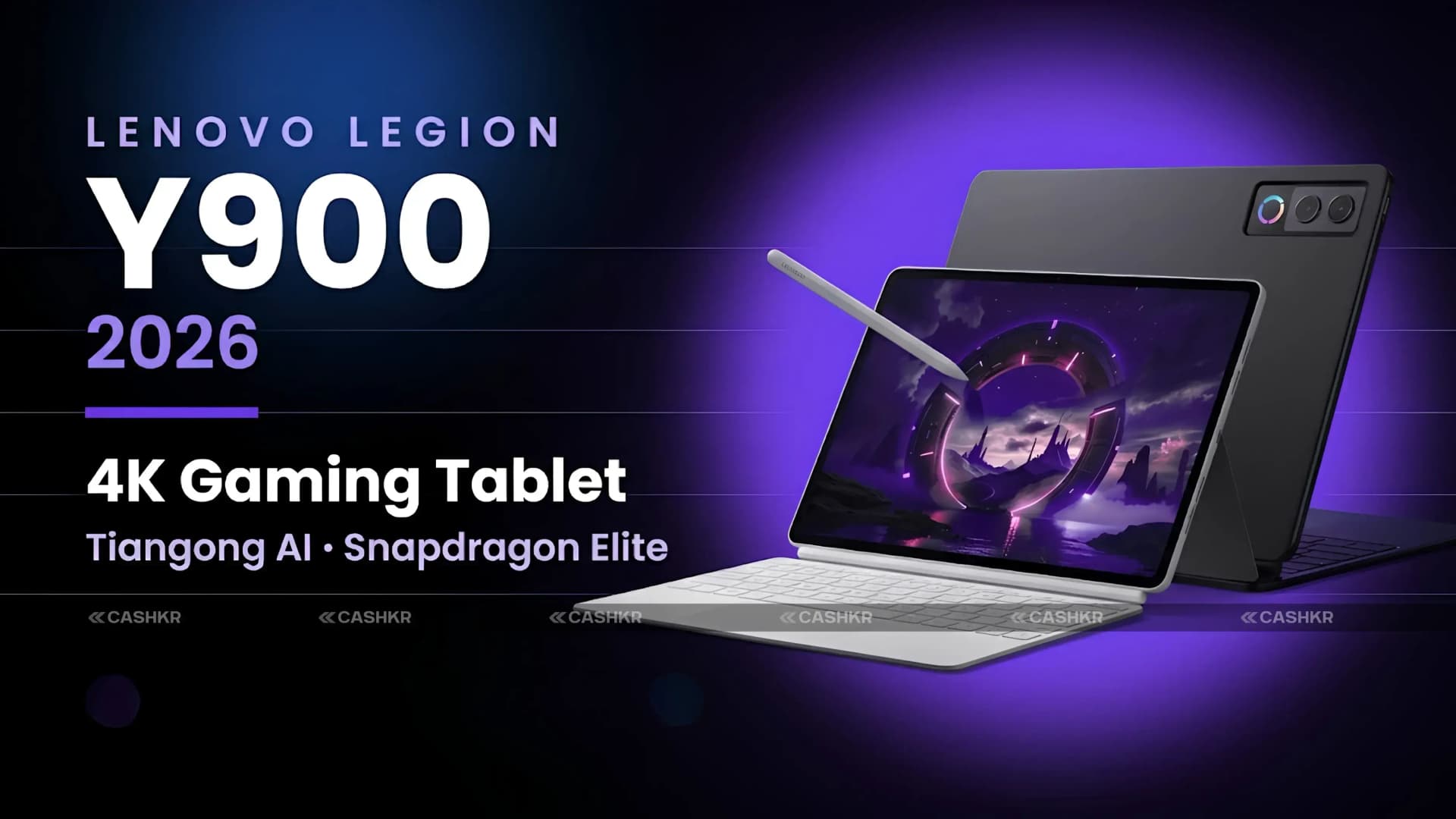
Lenovo Legion Y900 2026 gaming tablet launched in 11.1 and 13-inch sizes.

Yaskar Jung Shah
Senior Tech Writer
Key Takeaways
Lenovo Legion Y900 2026 gaming tablet launched in 11.1 and 13-inch sizes.
Lenovo Legion Y900 (2026) Launched: 4K 144Hz Display, Dimensity 9500s
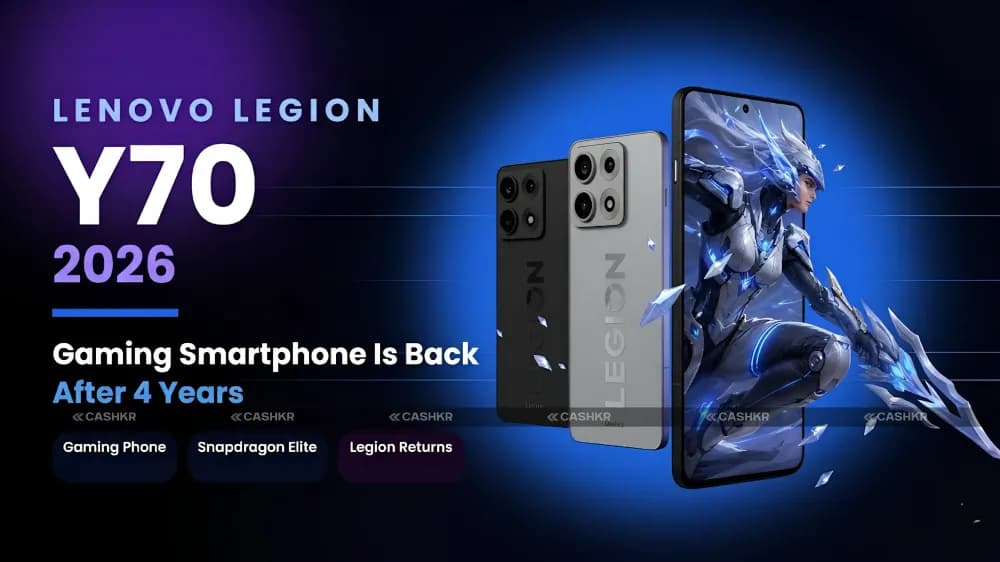
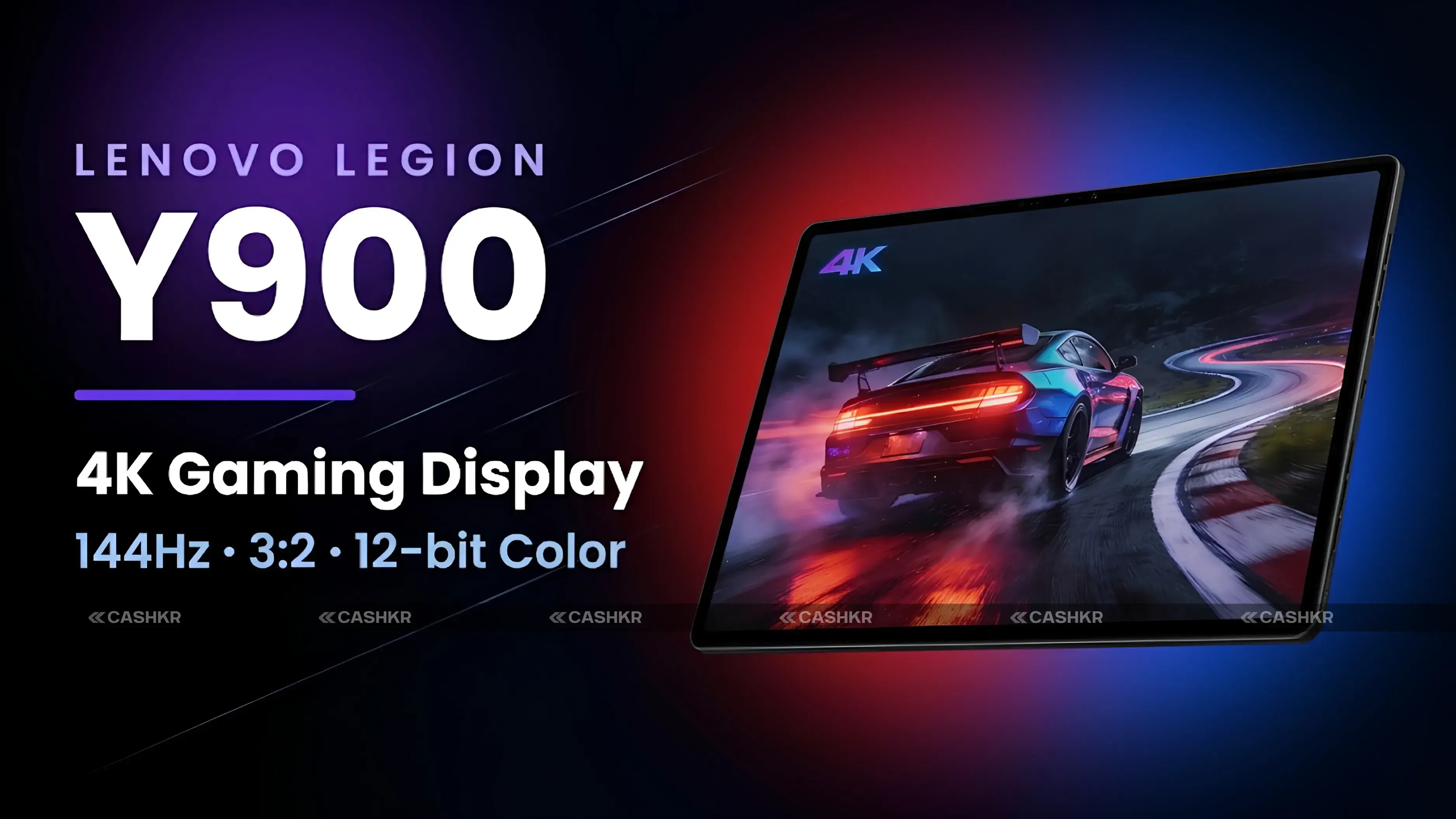
Quick Summary: Lenovo officially launched the Legion Y900 (2026) gaming tablet in China in two display sizes, alongside the Legion Y70 (2026) gaming smartphone, at the May 2026 event. The 11.1-inch model starts at CNY 3,099 (approx. Rs. 48,400) and the 13-inch model at CNY 3,799 (approx. Rs. 54,000) for the base 8GB plus 256GB configurations. Both share identical core specifications: a 4K 3,840 x 2,560 pixel display at 144Hz with a 3:2 aspect ratio, 12-bit color depth, 1,100 nits brightness, up to 2,340Hz touch sampling, 100 percent DCI-P3, Dolby Vision, MediaTek Dimensity 9500s chipset, 13MP rear and 8MP front cameras, quad Dolby Atmos speakers, and 68W wired fast charging. Battery differences: the 11.1-inch model has a 11,000 mAh battery, and the 13-inch model has a 12,700 mAh battery. Both run Android 16. No global launch has been confirmed.
Lenovo Legion Y900 (2026) Price in India
| Model | RAM + Storage | Price (CNY) | Approx. Price (INR) |
|---|---|---|---|
| 11.1-inch Model | 8GB + 256GB (base) | CNY 3,099 | ₹48,400 |
| 13-inch Model | 8GB + 256GB (base) | CNY 3,799 | ₹54,000 |
11.1-Inch vs 13-Inch: Which Legion Y900 (2026) Should You Choose?
Lenovo Legion Y900 (2026) Display: 4K 3:2 at 144Hz with 2,340Hz Touch Sampling
Lenovo Legion Y900 (2026) Processor: MediaTek Dimensity 9500s
Lenovo Legion Y900 (2026) Audio: Quad Speakers with Dolby Atmos
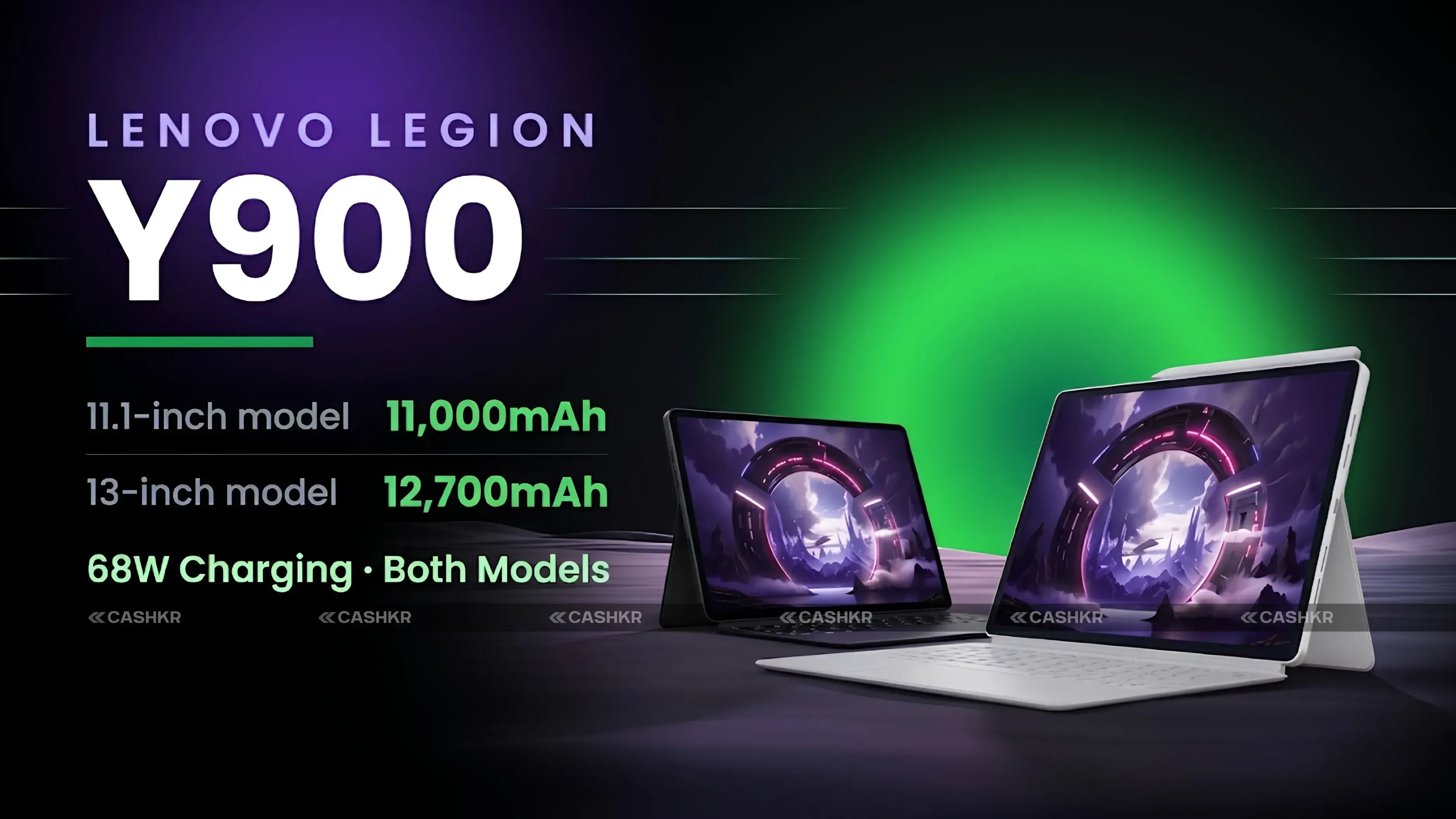
Lenovo Legion Y900 (2026) Battery and Charging
Lenovo Legion Y900 (2026) Cameras
Lenovo Legion Y900 (2026) Software
11.1-Inch vs 13-Inch: Side-by-Side Specifications
| Specification | 11.1-inch Model | 13-inch Model |
|---|---|---|
| Display Size | 11.1 inches | 13 inches |
| Resolution | 4K (3,840 × 2,560 pixels) | 4K (3,840 × 2,560 pixels) |
| Refresh Rate | 144Hz | 144Hz |
| Aspect Ratio | 3:2 | 3:2 |
| Colour Depth | 12-bit | 12-bit |
| Peak Brightness | 1,100 nits | 1,100 nits |
| Touch Sampling Rate | Up to 2,340Hz | Up to 2,340Hz |
| Chipset | MediaTek Dimensity 9500s | MediaTek Dimensity 9500s |
| RAM Options | 8GB / 12GB LPDDR5x | 8GB / 12GB / 16GB LPDDR5x |
| Storage Options | 256GB / 512GB UFS 4.1 | 256GB / 512GB UFS 4.1 |
| Rear Camera | 13MP | 13MP |
| Front Camera | 8MP | 8MP |
| Speakers | Quad speakers with Dolby Atmos | Quad speakers with Dolby Atmos |
| Battery | 11,000mAh | 12,700mAh |
| Charging | 68W wired charging | 68W wired charging |
| Operating System | Android 16 | Android 16 |
| Glass Protection | Gorilla Glass 7i | Gorilla Glass 7i |
| Certifications | TÜV True 4K, Low Blue Light, Flicker-Free | TÜV True 4K, Low Blue Light, Flicker-Free |
| Base Price (CNY) | CNY 3,099 (~₹48,400) | CNY 3,799 (~₹54,000) |
| Max Configuration | 12GB + 512GB | 16GB + 512GB |
How Do the Legion Y900 (2026) Models Compare to Other Tablets in This Session?
Final Verdict
Bottom Line: The Lenovo Legion Y900 (2026) delivers a 4K 144Hz 3:2 gaming tablet in two sizes at competitive China pricing. The 2,340Hz touch sampling rate is the standout gaming specification in its tier. Choose the 11.1-inch for portability or the 13-inch for maximum screen area and 16GB RAM option. No global or India launch has been confirmed.
FAQs
1. What sizes does the Lenovo Legion Y900 (2026) come in?
The Lenovo Legion Y900 (2026) is available in two display sizes: 11.1 inches and 13 inches. Both share the same core specifications, including the 4K 144Hz 3:2 display, Dimensity 9500s chipset, quad Dolby Atmos speakers, 68W wired charging, Android 16, and camera configuration. The key differences are battery capacity (11,000 mAh in the 11.1-inch versus 12,700 mAh in the 13-inch), maximum available RAM (12GB in the 11.1-inch versus 16GB in the 13-inch), and starting price (CNY 3,099 versus CNY 3,799 for the base 8GB plus 256GB variants).
2. What is the price of the Lenovo Legion Y900 (2026) in China?
The 11.1-inch Lenovo Legion Y900 (2026) starts at CNY 3,099 for the 8GB plus 256GB configuration, approximately Rs. 48,400. The 13-inch model starts at CNY 3,799 for the 8GB plus 256GB configuration, approximately Rs. 54,000. Both are available in 8GB plus 256GB, 12GB plus 256GB, and 12GB plus 512GB configurations. The 13-inch additionally offers a 16GB plus 512GB top variant. All rupee figures are approximate conversions for reference. No India pricing or India launch has been announced.
3. What display does the Lenovo Legion Y900 (2026) have?
The Lenovo Legion Y900 (2026) features a 4K resolution display at 3,840 by 2,560 pixels with a 144Hz refresh rate, 3:2 aspect ratio, 12-bit color depth, up to 1,100 nits peak brightness, 100 percent DCI-P3 coverage, Dolby Vision support, up to 2,340Hz touch sampling rate, Corning Gorilla Glass 7i protection, and PWM dimming. The display also carries TUV Rheinland True 4K High Visual Clarity, Low Blue Light, and Flicker-Free certifications. These specifications apply to both the 11.1-inch and 13-inch models, with the same display quality across both sizes.
4. What is the touch sampling rate of the Lenovo Legion Y900 (2026)?
The Lenovo Legion Y900 (2026) supports a touch sampling rate of up to 2,340Hz. This measures how many times per second the display checks for and registers touch inputs. At 2,340Hz, the tablet detects touch actions over 2,000 times per second, which is among the highest touch sampling rates confirmed in any tablet or smartphone in 2026. For competitive gaming, where quick, precise touch inputs determine outcomes, 2,340Hz sampling minimizes the perceptible lag between a physical touch action and the game's response, providing a more immediate, responsive control experience than the 120Hz to 480Hz touch sampling found in standard non-gaming devices.
5. What chipset does the Lenovo Legion Y900 (2026) use?
The Lenovo Legion Y900 (2026) is powered by the MediaTek Dimensity 9500s chipset. The 9500s is a variant of the Dimensity 9500 flagship chipset family optimized for the tablet category with a focus on sustained performance and power efficiency over long sessions. The Dimensity 9500 is used in several 2026 premium Android tablets and smartphones, including the Samsung Galaxy Tab S12 (expected) and the Oppo Find X9s. It is paired with up to 16GB of LPDDR5x RAM in the 13-inch top configuration and up to 512GB of UFS 4.1 storage across both models.
6. What audio system does the Lenovo Legion Y900 (2026) have?
The Lenovo Legion Y900 (2026) features a quad-speaker setup with Dolby Atmos support on both the 11.1-inch and 13-inch models. Four speakers with Dolby Atmos processing deliver spatial audio that simulates surround sound for gaming, movies, and music playback on the tablet. Dolby Atmos encoding in compatible content adds height and spatial positioning to the audio output, creating a more immersive listening experience than standard stereo on a flat two-speaker setup. The quad configuration is standard for premium tablets, though the iQOO Pad 6 Pro and Huawei MatePad Pro Max offer six and eight speakers, respectively at higher price points.
7. How fast does the Lenovo Legion Y900 (2026) charge?
Both the 11.1-inch and 13-inch Lenovo Legion Y900 (2026) models support 68W wired fast charging via USB-C. At 68W, the 11,000mAh battery in the smaller model should reach a full charge in approximately 90 to 100 minutes, and the 12,700mAh in the 13-inch model will take somewhat longer at the same charging rate. Wireless charging is not confirmed for either model. The 68W charging speed is capable but slower than what some competing tablets and smartphones offer, which is a consideration for buyers who prefer quick recharge turnaround during gaming or productivity sessions.
8. Does the Lenovo Legion Y900 (2026) support Dolby Vision?
Yes, both the 11.1-inch and 13-inch Lenovo Legion Y900 (2026) displays support Dolby Vision. Dolby Vision is a premium HDR format that enables displays to render content with a wider dynamic range, more accurate highlights and shadows, and scene-by-scene dynamic metadata processing, compared to standard HDR10. The combination of Dolby Vision display support and Dolby Atmos audio on the Y900 (2026) means compatible content from streaming platforms like Netflix and Disney+ that offer both formats will play at their highest available quality on this tablet.
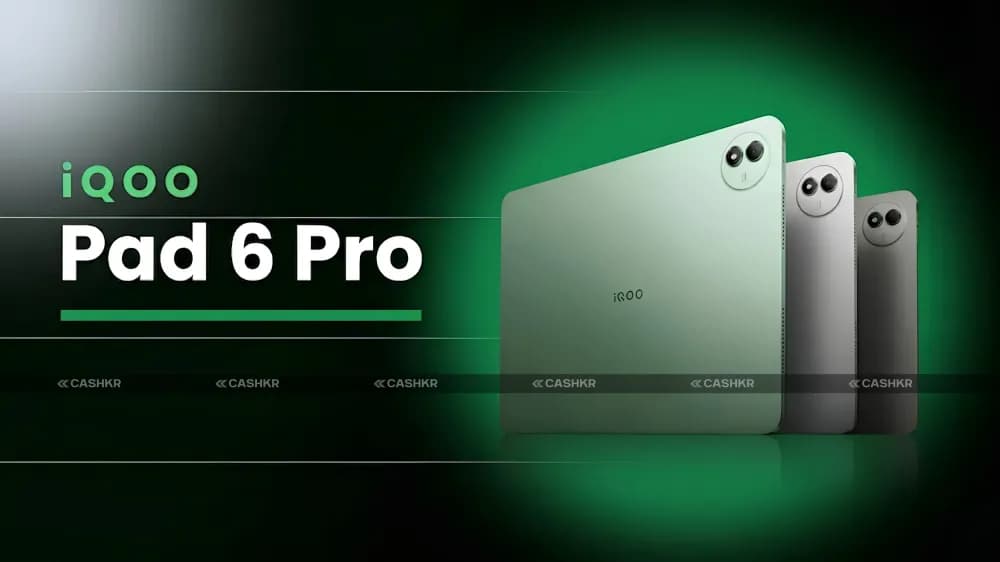
9. How does the Lenovo Legion Y900 (2026) compare to the iQOO Pad 6 Pro?
The Lenovo Legion Y900 (2026) and the iQOO Pad 6 Pro are both 2026 Chinese gaming tablets with 13-inch displays and 4K at 144Hz, with 3:2 aspect ratios, but they differ on several key specifications. The iQOO Pad 6 Pro uses the Snapdragon 8 Elite Gen 5, which outperforms the Legion Y900's Dimensity 9500s. The Pad 6 Pro has a 13,000mAh battery, compared to the Legion's 12,700mAh. The Pad 6 Pro has eight speakers, compared to the Legion's four. The Legion Y900's 2,340Hz touch sampling rate is significantly higher than the iQOO Pad 6 Pro's confirmed display sampling rate. The Legion Y900 (2026) starts at CNY 3,799 for the 13-inch model, versus the Pad 6 Pro's CNY 4,499 base price, giving the Y900 a price advantage at the entry level.
10. Will the Lenovo Legion Y900 (2026) launch in India?
Lenovo has not announced global or India availability for the Legion Y900 (2026). The tablet is currently available only in the Chinese market. Lenovo India sells tablets through its Tab series and has gaming laptop presence through the Legion brand, but a Legion gaming tablet has not been officially confirmed for India. Whether the Y900 (2026) reaches India will depend on Lenovo India's strategic decisions for the gaming tablet segment. Monitoring Lenovo India's official website and major Indian electronics retailers for any listing or announcement after the China launch is the recommended approach for interested buyers.
If you want to sell your old devices, then click here.
Yaskar Jung Shah
Senior Tech Writer
Yaskar Jung Shahis a technology enthusiast with over 5 years of experience covering AI, machine learning, and has contributed to major tech publications worldwide. He holds a Master's Degree in Computer Science from leading institutions.